
Catholicism and its church in Ká Hó
- Shelley Tse
- 2025年5月8日
- 讀畢需時 14 分鐘


The document provides a comprehensive overview of the history and transformation of Vila de Nossa Senhora in Macau. It highlights the significant contributions of catholic monks including Fr. Gaetano Nicosia, who played a pivotal role in renaming the leprosy village, improving the living conditions for its residents, and establishing essential social welfare services. The text also delves into the establishment of the Ká Hó Refugee Camp, which provided shelter and support for refugees. Additionally, it discusses the development of educational facilities for the refugees, emphasizing the importance of education in their integration and future prospects. These efforts collectively showcase the significant humanitarian and social developments in the region, reflecting a deep commitment to improving the lives of the marginalized and displaced.
Vila de Nossa Senhora and Catholic monks and nuns
Vila de Nossa Senhora, a village located in Ká Hó area, obtained a prominent history from its name. The village, used to be the asylum congelomerate of Leprosy in macao, procured its novel name as"Vila de Nossa Senhora" from the legendary father Fr. Gaetano Nicosia(胡子義神父). In 12/8/1963, after the handover of the Kaho leprosy facility, Fr. Gaetano Nicosia(胡子義神父) made three modification. they are respectively.
1. Coverted the name from "Kaho Leprosy village"(痲瘋村) to "Vila de Nossa Senhora", which is a more sincere and agreeable name.
2. Changing the way for addressing the leprocy patients from "痲瘋人", which is partially insulting, to "brothers and sisters"
3. The rehabilitation process of the Leprosy patients
In 1966, the Holy see endowed 10000 $USD to the Macao Diocese for the construction of the Our Lady of Sorrows Church. Fr. Gaetano Nicosia transformed the Vila de Nossa Senhora into a social welfare service complex, he further established ed a nursery in the village that could accommodate 20 babies, and opened a craft workshop for the girls in the village to earn some extra money, and later it became a place of pilgrimage.
Furthermore, Fr. Gaetano Nicosia was concerned about the education of the children of Taipa residents and the needy children. In the 1970s, Fr. Gaetano Nicosia searched for caring personnel and nuns who were willing to serve, and established the "Centro De Santa Lucia (聖路濟亞中心)" and "St. John's Children's Home" in Macau, providing appropriate shelter for hundreds of abandoned disabled children and mentally ill patients. He raised funds from overseas Catholics and built the St. Joseph's School in Ká Hó in 1975. In 1983, Fr. Gaetano Nicosia transferred th+e management rights of "Ká Hó St. Joseph's Primary School" to the Salesian Sisters of St John Bosco (母佑會), and established the "Bosco Youth Home" next to "Ká Hó St. Joseph's Primary School" to care for homeless teenagers. In 1985, Fr. Gaetano Nicosia established a new school "Escola Dom Luis VersigLia" to commemorate the great achievements of San Louis Versiglia and focus on promoting the Bosco preventive education method. The school aids poor and helpless teenagers to study and provides boarding services. The school only has grades 3 to 6 of primary school. However, in 1994, the Dom Luis VersigLia Vocational Training Center was established in the Ká Hó Vietnamese Refugee Camp to provide electrical and plumbing training courses for young people. In 2019, the vocational training center's "Information and Network Technology" course was launched, and in July of the same year, a training and employment planning cooperation agreement was signed with CTM.
Father Lancelote Miguel Rodrigues is a clergyman that was appointed as the UNHCR Representative in Macau In 1977, after his inauguration, he advocated the establishment of the Ká Hó refugee camp through relentless endeavour, he travelled between the U.S. and Macao for this specific issue for numerous times. Finally, on December 8, 1978, the refugee camp was established.
Irmäo Manuel Mendonça da Càmara, S.J.) 馬仲仿修士 is a jesuits monk, he came to China in 1951, then studied in Centro Hospitalar Conde de São Januário(仁伯爵綜合醫院,俗稱山頂醫院) from 1980s, he then started to proffer treatment for patients in nursing home, intellectual disabled person and Ká Hó leprosarium.
The impact of Second Vatican Council
In 1960s, Bishop Paulo Jose Tavares(戴維理神父), he was consecrated in 1961, his tenure was from 1961-1973. during this period of time, he had contributed to the development of Macao Diocese. accoding to the essense and teaching of the second vatican concuil, Bishop Paulo redivided the districts of macao diocese, later in 1966, after the establishment of the Coloane parish, the Bishop furhter encouraged and facilitated the construction of Our lady of sorrow church, which was leaded by Fr. Gaetano Nicosia. Furthermore, after the attendance of the second vatican council in 1961, the Macao Diocese adopted several principles, thus precipitating the formation of several charity groups, such as Macao Catholic Action(澳門公教進行會), Macao Cathwel Service. The principles are listed below:
1. social participation
2. the combination of catholic doctrine and local tradition
3. establish the lifetime Deacon system
4. facilitate the promotion and furtherance of catholic doctrine by worshipers
5. the missionary quest of holy orders
6. the prospection of Unitatis redintegratio (大公主義)and its practice
7. academic research and the communication with the local cultural community
They then expanded their duty and services, actively participating in the social aid initiatives in Ká Hó and other areas. Aiding people in need and impoverished.
In 1904, Father Joao paulino De Azevedo e Castro (鮑理諾神父, Bishop of Macao from1902-1918) invited the Salesians of Don Bosco for their station and official establishment of Chinese province, as a response, the salesian institution came to china later in 1904 and erected a series of social charity institutions and NGOs, now, they actively participate in the social affairs in Macao. In terms of their presence in Ká Hó, Fr. Gaetano Nicosia was one of the monks affiliated to the salesian institution. As a patroner, the salesian institute invested much of its monetary and manpower resouces into the development of Ká Hó, including the construction of Centro de Formacäo Juvenil DomBosco, Escola Dom Luis VersigLia, Escola de S. José Ká Hó, Centro da Santa Lucia, Ká Hó Catholic Care Home, St. Joseph's Home for Disabled Children.
Catholic Diocese and its Involvement of Refugee Camp
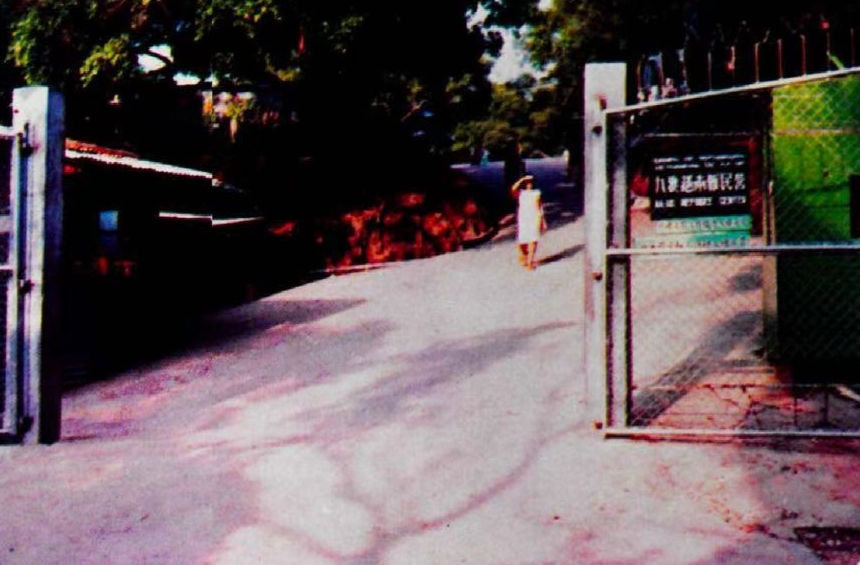
The Vietnamese Refugee Camp at Ká Hó Coloane, Macau, situated on land ceded to the Diocese by the Government Macau, is under the auspices of the (UNHCR) and administered by Catholic Relief Services (USCC). It originally served as a barracks for the Portuguese army, and later became a summer camp for students in Catholic schools. Due to the sharp increase of Vietnamese refugees flowing into Macau, the Camp was converted into a Refugee Camp on December 8, 1978.
Management organisations
United Nations High Commissioner of Refugee
The UNHCR has assumed responsibility for the resettlement of the refugees in third countries of asylum, and is also financially responsible for their care and the maintenance and general upkeep of the Camp.
Catholic Relief Services
The USCC has provided accommodation with funds received from overseas, and also inaugurated schools for refugee children.
Caritas Macau and the Portuguese Red Cross Macau Branch
They have evinced a great interest in the welfare of the refugees and contributed considerable financial purposes.
The Camp office
The Camp office is maintained by six staff members who deal with the routine work of the Camp including the camp manager (Mr. Nelson Lee), two assistant camp managers, three social workers, two drivers and three security guards.
Rev. Lancelot Miguel Rodrigues - Program Director of Catholic Relief Services
Fr. Mok (莫慶思神父) (Lancelot Miguel Rodrigues) born on December 21 in Malacca, Malaysia. Their ancestors were Portuguese who settled in this former Portuguese colony. His father is of Portuguese descent and his mother is of Malay and Dutch descent. There are twelve brothers and sisters in total.
After completing his English primary education in Malacca, he joined St. Joseph's Seminary in Macau on November 11, 1935 to study preparatory and theological courses. It took him 13 years to complete the course, during which he and his classmates learned Portuguese and Chinese.
Lancelot Miguel Rodrigues
Since 1949, Fr. Mok has served as assistant priest of St. Anthony’s Church; From 1950 to 1951, he was also the conductor of the St. Cecilia Polyphonic Choir of St. Joseph's Seminary. From October 1958 to October 1959, he was acting rector of St. Anthony Parish. From September 7, 1966 to On November 26, he became the priest of the church. From 1951 to 1952, the bishop approved Fr. Mok to join the Catholic Welfare Association headquartered in the United States.
(Catholic Relief Services) was established by the American Bishops Conference. Its service targets are foreign refugees. It has branches in more than 100 countries around the world, including a branch in Hong Kong. Fr. Mok became the Society's representative in Macau in 1954.
From 1949 to 1965, Fr. Mok served as the guiding priest at the Shanghai Portuguese Refugee Camp in Qingzhou. During this time, Fr. Mok worked to improve their lives and find them resettlement in other countries, and as a result, he established unbreakable friendships with many refugees.
As his work required him to come into contact with various parties, the priest also established an international network, which was very useful for him in assisting refugees from all over the world who continued to flock to Macau after the 1960s. In 1962, Fr. Mok was appointed Director of the Catholic Welfare Association in the United States, a position he held until May 1994, when the association withdrew from Hong Kong (and Macau). Fr. Mok received a huge amount of donations through the welfare society and put them into parish or non-parish charities and social relief projects. Over the years, a lot of money has been given to build houses, nurseries, clinics (by the nuns provided medical care on site, with doctors providing free consultations once or twice a week) and community centers, and distributed food (canned milk, olive oil, etc.) to the poor through the Red Cross and the Mothers' Association (ultimately helping 95,000 people) and schools (26,000 loaves of bread per day and a glass of raw milk for each student).
By 1973, living conditions in Macau had "improved" and there was no longer a need to collect these donations. According to Fr Mok, he had "a few years' rest" after his death, although he still works as a social welfare officer for the diocese of Macau.
Director of the Secretariat (a position he had held since 1962), member of the Macau Relief Society, representative of the Catholic Welfare Council of the United States and representative of the Macau Diocese of International Religion.
In November 1977, the first batch of Vietnamese refugees arrived in Macau and Hong Kong. In those days, their traces were all over the world. Fr. Mok then discussed with government officials, including Police Chief Lobo J' Arilo and Governor Gatcia Lcandro, hoping to approve the refugees to come to Macau.
The first batch of refugees consisted of 23 people, to be exact. 24 people, because one of them was born in Macau. The United Nations requested the Portuguese Macau government to appoint Fr. Mok was the Catholic Welfare Society's representative on the issue of Vietnamese refugees. The priest said that the Portuguese government of Macau always kept its door open and never refused his request. They also provided him with endless help: free medicine, medical assistance, education, etc.
Foreign rescue organizations such as the United States, Sweden, and France also helped Xu. However, he repeatedly stressed that the Portuguese government did provide a lot of help. Star said that since Hong Kong is not prepared to accept so many refugees, he asked them to stay in Macau for the time being.
As a result, 15,000 Vietnamese refugees remained in Macau. At that time, Vietnamese refugee camps were set up in Green island, Camões and Ká Hó. The camp costs about $10 million to operate, with much of the funding coming from the United Nations, the Red Cross, the U.S. government, the Catholic Welfare Association and Nordic religious groups. In healthcare, education.
Both the Portuguese Macau government and the Macau Diocese provided assistance in the provision and maintenance of land. Consuls from several UN member states in Hong Kong and Macau (the United States, Norway, Canada, etc.) came to Macau to divert these refugees, that is, to recognize their identities. Therefore, the Macau Water Police organized a band and hosted banquets for Macau consuls at these foreign consulates. To this day, they maintain a strong friendship and invite them to dinner three times a year to express their gratitude, with wine, food and fado (Portuguese folk songs) of course.
Between 1963 and July 1991, thousands of refugees came to Macau, mainly from Vietnam, but also from China, Indonesia, Myanmar, Malaysia, Laos and Cambodia. To date, people from Myanmar, Indonesia, Malaysia and other countries have already settled down in Macau.
Fr. Mok said that it was all thanks to the help of local institutions and churches, as well as the government and this was made possible with the support of the American bishops (Catholic Relief Services).
Daily life
Ká Hó Refugee Camp is an open Camp. Everyone is free to leave, but must return by 11:00 p.m. before the gates are closed. If a refugee intends to stay outside overnight, he must get prior approval beforehand from the Camp administration.
The refugees were given the basic necessities, including clothes, slippers, towels, toothpaste, toothbrushes, basins, soap, kitchen utensils, cups and spoons, blankets and quilts, straw mats, thermoses, flasks and plastic buckets. They were housed and given access to cooking and sanitary facilities.
Rice and cash allowances are distributed once a week. A single person receives 7 patacas a day, couples receive 13 patacas and families with three or more members get a progressively smaller allowance per person. With this money, the refugees may buy their favorite food and cook for themselves, or they may eat out in a restaurant.
Many refugees wish to find employment to supplement the United Nations cash allowance, but the scarcity of jobs in Macau and the long distance from the City, make it difficult for a refugee to find work. Several refugees work outside the Camp, Leaving in the morning and returning in the evening. In order to provide more work opportunities, the Camp has contracted eight factories in Macau to let the refugees assemble plastic flowers. The extra income enables them to buy more clothing or other necessities. Nearly 80% of the residents are engaged in this business, while a few others make gloves, key rings and feather brooms.
The refugees themselves designed and built the showers, kitchens, latrines, dormitories, incinerator and septic tanks. Team leaders, security guards, workers in the Cooperative and workshops, the barber and hairdresser, accountant, cashier and purchaser are all refugees. They also issue rice and cash allowances. The administrative office only directs and supervises.
Education
In early September, 1979 Fr. Lancelot Rodrigues, Director of C.R.S. USCC entrusted Fr. Gaetano Nicosia S.D.B. the principal of St. Joseph's School, Ká Hó, Coloane to plan and prepare the school. Four classrooms were built in the open area near the Camp.
At that time, there were 270 students, 6 teachers and 5 classes, 2 kindergartens (they had the lessons morning & afternoon) Primary 1, Primary 2, Primary 3.
From September, 1980 up to July 1981, due to the increase of refugees, students had also increased from 270 to 340 students, there were not enough classrooms to accommodate so many students. Therefore, another new building was built with four classrooms near the old classrooms. These four new classrooms plus those four old ones, give us 8 classrooms now. The Kindergarten has also been increased from 2 to 4 classes, the primary has been increased by one more class (Primary 4) besides the Primary 1, 2, 3. There are 13 teachers. Primary 5 & 6 students study in St. Joseph's School, Ká Hó, Coloane near the Camp.
Regarding the English Classes for Adults, Sr. Cecilia Wong Principal of St. Mary's School, Coloane we’re invited to administrat the English Classes. For these English Classes there are 7 teachers, 425 students and 20 classes. Classes are held from 4:00 to 5:30 p.m. on Monday, Wednesday and Friday, and from 1:30 to 7:30 p.m. on Tuesday, Thursday and Saturday.
During the period of July, 1981. Fr. Nicosia resigned from the Primary, because he had a lot of his own work to do and no more time to take care of the school at the same time, and Sr. Cecilia Wong was transferred back to Hong Kong. Fr. Lancelot entrusted a member of his staff Mr. Luis Man in company with Mr. Nelson Lee to manage the Educational Programme of the Camp.
The School has been reorganized by Mr. Lee and Mr. Man. The new school term reopened on the 4th September, 1981, due to the fact that many of the refugees have been resettled abroad and at the same time, students' movements are quite different from those in regular schools in Macau. Only 155 students with 7 teachers, 3 classes for kindergarten, 3 classes for Primary (Primary 1, 2, 3,) for this term. Besides the above students, there are other 12 students who are studying in Primary 5 & 6 in St. Joseph's School, Ká Hó, Coloane.
There are Vietnamese mother tongue children, only one Vietnamese could teach them English, Vietnamese, Arithmetic, Singing, Drawing, Manual Training, Hand work and Games.
Regarding the English Classes for Adults, we have 8 teachers, 662 students and 30 classes. Classes are held from Monday to Saturday, from 4:00 to 6:00 p.m. for Chinese and from 6:30 to 7:30 p.m. for Vietnamese.
Miss Marion Williams was invited through the Director of Argyle 4 Transit Centre, Hong Kong to train teachers’ method of teaching on listening and speaking.
Entertainment
On certain holidays, organizations such as Young promotion Club, Coloane Catholic Church come to play competitive games with the residents. Occasionally they bring with them many gifts for the refugees. Mass and cheer are held during Christmas.
The Camp has also organized some touring and hiking outings. Many refugees love to swim at nearby Ká Hó and Hac Sa Beach.
In addition to students’ extra-curricular activities, each summer they attend Camp at Cheoc Van Beach for one week, courtesy of Caritas Macau.
There are four colour television sets in the Camp, the refugees can watch TV at night from 6 p.m. to 1 p.m.
There are areas for high and long jumping, weight lifting, parallel bars, football, basketball, volleyball, badminton and table tennis. Sports matches are held regularly throughout the year. These sporting events not only give the residents some recreation, but also help develop comradeship. Playing chess is another popular activity. Competitions of Chinese chess are organized every year.
Though the Camp is not a permanent home for the refugees, the recreational activities left happy memories of their short stay at Ká Hó Refugee Camp.
Facilities and services
Daily use
Most of the water supply is piped from a nearby reservoir. Drinking water, purified through a filter, is delivered by a pump. In addition, the Taipa Municipal Council provides a tankload of drinking water each day for the refugees. Thus there is sufficient water for everyone.
Electricity is transmitted to the Camp by the generator at the Ká Hó Leprosarium. Though the electric power is sometimes a bit weak, the Camp is adequately lit at night.
Clinic
The Camp has a clinic staffed by two nurses. D.r Humberto Evola of S. Juanario Central Hospital visits the refugees on Mondays, Wednesdays and Fridays. Patients with serious illnesses are sent to Central Hospital. The clinic has made a remarkable contribution towards protecting the health of the refugees.
Transportation
A 26-seater bus, donated by the United Nations, provides transportation for the refugees and camp staff. Refugees use the bus for various reasons, such as; going to Macau City for medical examinations, having interviews with immigration officers, going to the movies once a week and attending sporting events and technical school.
Another car, shared by the Portuguese Red Cross and Catholic Relief Services of Macau, is available only at night for emergencies.
Cooperative
Each resident originally paid just one dollar for his share, and this money, plus a subsidy from the Camp, provided the total funds. Cigarettes, soft drinks, candy, biscuits, canned goods, gas and other everyday items are sold. The prices are lower than outside, for the Cooperative is operated mainly as a convenience for the residents. As business increased, and in order to help single persons, the Cooperative started to serve low-cost meals in April this year. Two dollars buy a meal with soup. Other than the 140 singles persons, many family members buy their meals at the Cooperative. Monthly profits are appropriated to the refugees' welfare. Before leaving the Camp, the refugees receive their contribution back from the Cooperative.
Barber shop
One barber and one hairdresser were selected to work here. The shop offering haircuts, shampoos, shaves, ear cleaning, drying hair curling and permanent wave services.The charge is much less than outside. 80% of the profits go to the two workers, while the other 20% is set aside for welfare of the Camp.
Sanitary
An incinerator burns all the rubbish accumulated daily. Three septic tanks were built to treat sewage, and to avoid polluting the sea water. A portable sprayer is used to spray insecticide and disinfectant each once a week. Certain refugees are assigned to clean their respective dormitories three times a day. Other refugees maintain the drains and gutters. All these efforts have resulted in good health for everyone. There had never been an outbreak of serious contagious diseases.


留言